
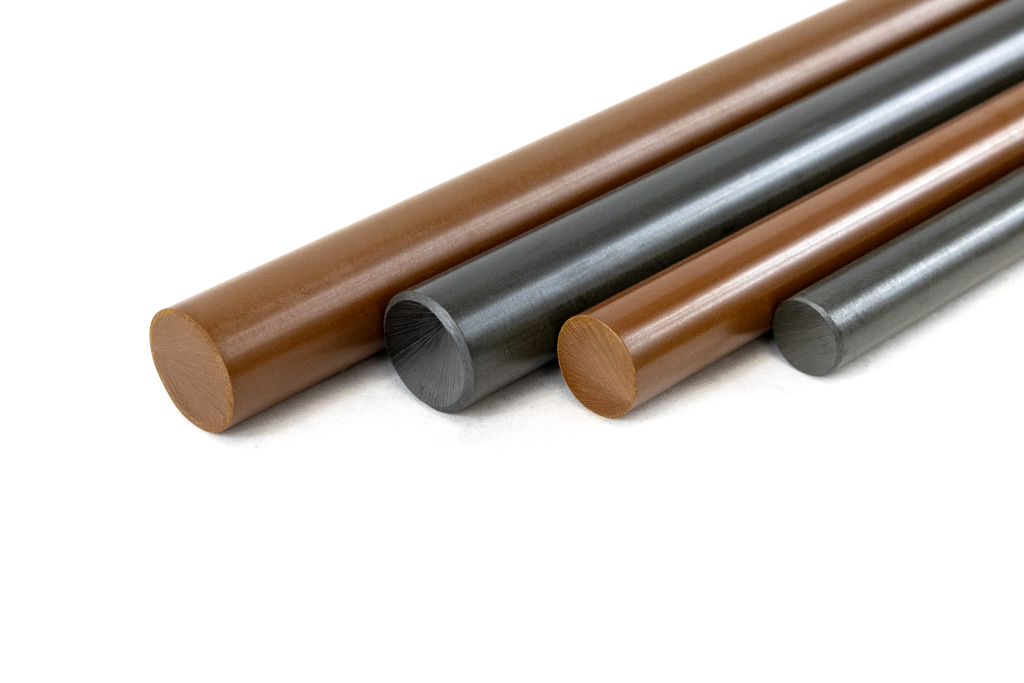
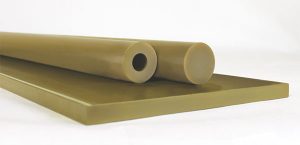
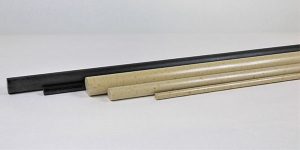
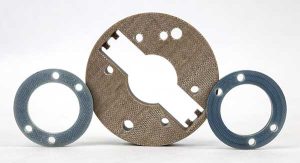
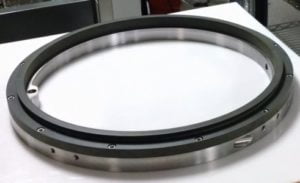

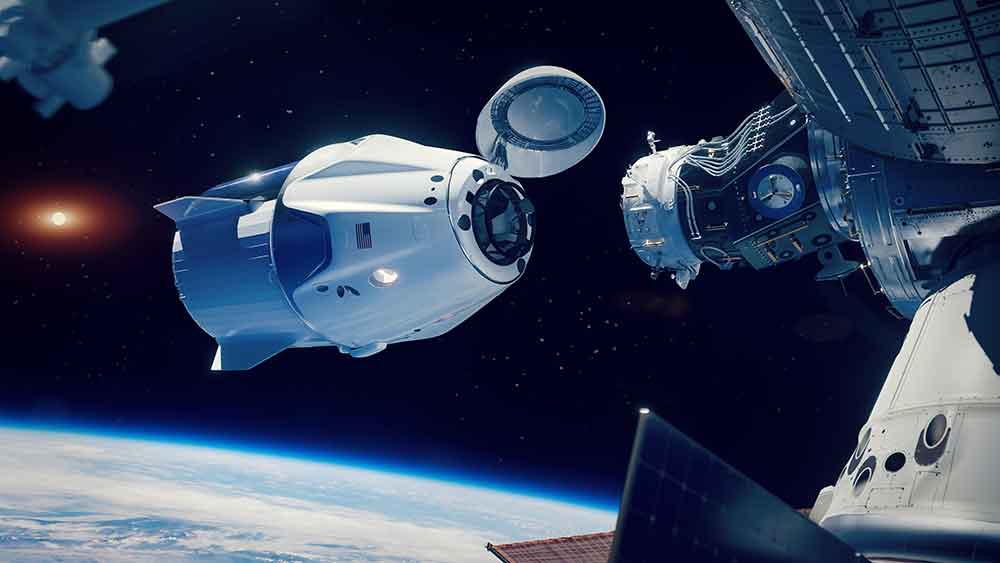
Requirements for long-term dependability, uncompromised safety, and light weight have made high-performance plastics the materials of choice for a multitude of applications in spacecraft equipment. Components machined or injection molded from Torlon PAI, PEEK, Ultem PEI, Vespel PI, Ryton R-4 PPS and other advanced polymers have proven their capabilities for decades, and their acceptance continues to grow in parallel with the spacecraft industry.
What Properties of Plastics are Important for Spacecraft Applications?
High-performance plastics offer properties that solve a number of complex engineering and material specification challenges related to spacecraft applications:
- Ductility and toughness at cryogenic temperatures
- Strength retention in proximity to the high temperatures of propulsion systems
- Structural integrity to withstand extreme vibrational forces, from rocket launch through various flight stages
- Resistance to solid and liquid propellants, hydraulic fluids and other chemicals
- Compliance with industry safety standards for flame and smoke generation
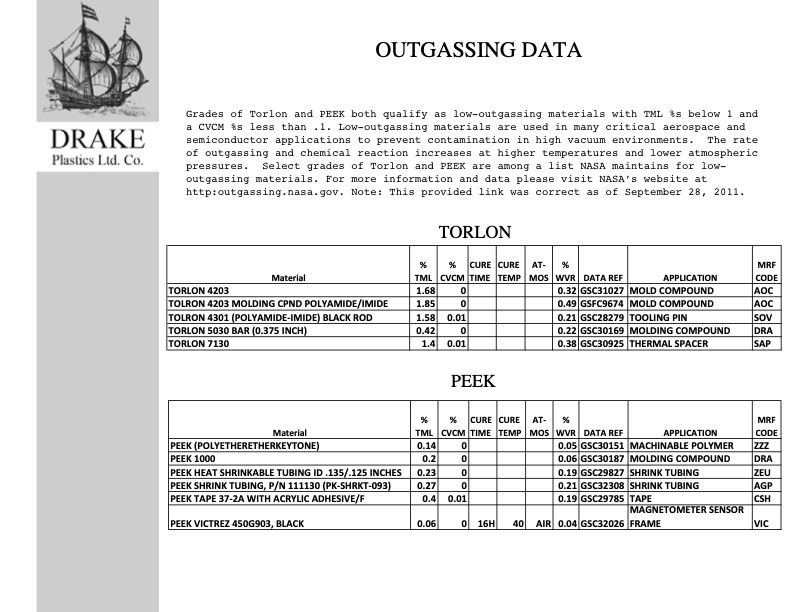
- Low vacuum outgassing to prevent excessive deposition of chemical condensates that can contaminate optical components and precision systems
- Retention of strength and ductility after long-term radiation exposure
What High-Performance Plastics Have the Properties Needed for Spacecraft Applications?
Several advanced polymers have a proven history in structural, electrical, fluid and mechanical systems in spacecraft. Their differences in properties and levels of tolerance to chemicals and radiation allow engineers to specify the optimum material for each component in its operating environment.
The following high-performance plastics have unique property profiles that are well-suited to specific application requirements:
- Torlon PAI (polyamide-imide), Vespel PI (polyimide) and Ultem PEI (polyether-imide) are imide polymers that maintain strength at cryogenic levels and extreme high temperature and withstand radiation exposure.
- Ketone polymers excel on chemical resistance. They include PEEK (polyetheretherketone), PEK (polyetherketone), and high-temperature PEEK XT and HT PEK.
- Ryton R-4 PPS, a polyphenylsulfone with 40% glass fiber content, is a high-strength material with excellent chemical resistance. It has no known solvents under 200°C.
- PCTFE, a fluoropolymer, performs well as a material for cryogenic seals in LOX, LH2 and other liquefied gas systems. It also has a high LOI (limiting oxygen index) to satisfy stringent flammability requirements.
- All comply with the industry’s flammability and smoke generation standards related to various applications.
Engineering note: Torlon PAI, PEEK, Ultem PEI and other high-performance polymers are available in grades with glass or carbon fibers that increase strength, and with solid lubricants that improve bearing and wear properties.
What Plastics Resist Exposure to Radiation in Space?
- Constant exposure to radiation in space can degrade certain polymers. Many embrittle in relatively short periods.
- Torlon PAI, PEEK and Ultem PEI maintain properties exceptionally well even at continuously high levels of radiation exposure.
- The radiation resistance of these polymers was confirmed in a test report from the American Composites Manufacturing Learning Center, summarized below.
- Torlon 5030 PAI, a high-strength 30% glass-reinforced polymer, was extruded into shapes and machined into parts by Drake Plastics as test specimens. The Torlon 5030 parts retained the required level of mechanical properties to pass testing satisfactorily at 109 rads, the highest level of test exposure.
- Victrex PEEK, another polymer that Drake Plastics extrudes into high performance stock shapes and machined and molded parts, also passed at 109
- Parts machined from 30% glass-reinforced Ultem 2300 PEI also demonstrated impressive property retention at 108
Why is Low Outgassing Important for Plastics in the Spacecraft Industry?
- Some plastics are prone to outgassing in a vacuum, and can release excessive amounts of volatiles.
- These volatiles can contaminate critical spacecraft systems and cloud optical elements and solar arrays, impairing their effectiveness.
What Plastics Exhibit Low Vacuum Outgassing?
- An advantage of Torlon PAI and PEEK for spacecraft applications is their alleviation of concerns over vacuum outgassing that is common to some plastics in the zero-gravity vacuum environment.
- Testing conducted for NASA has confirmed that specific grades of Torlon PAI and PEEK qualify as low-outgassing materials. This is based on TML (Total Mass Loss) levels that measured below 1% and a CVCM (Collected Volatile Condensable Material) of less than 0.1%.
- NASA includes the specific grades of Torlon PAI and PEEK that were tested, and the details of their test results, on the list of low outgassing materials that the agency maintains for applications in spacecraft.
What Plastics Retain Toughness and Strength at Cryogenic Temperatures in Space?
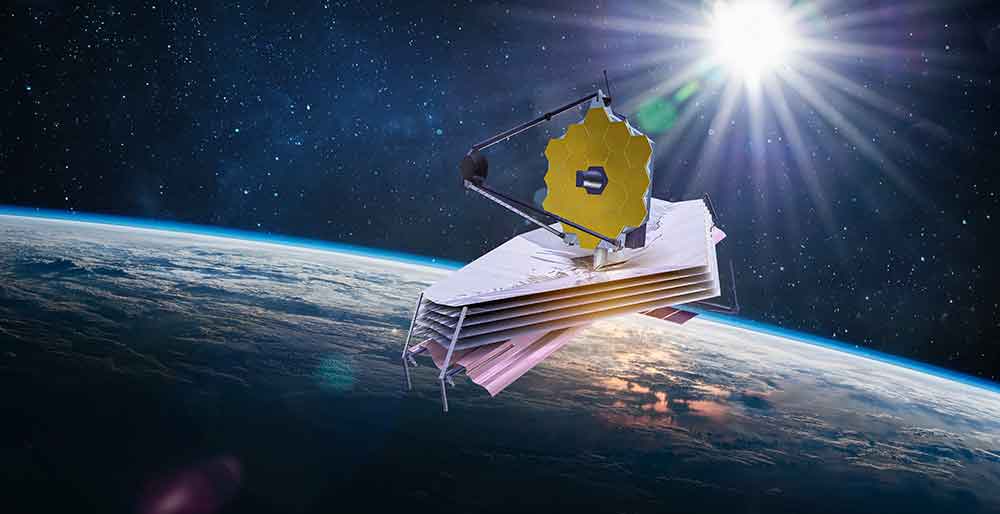
- A material’s ability to retain strength and toughness at cryogenic temperatures is particularly important for mechanisms and deployment systems in deep space telescopes and probes, where part integrity cannot be compromised.
- Torlon PAI, Vespel PI, CryoDyn CT-200 PEEK and PCTFE have all demonstrated they retain structural strength and ductility at cryogenic temperatures that can shatter many metals.
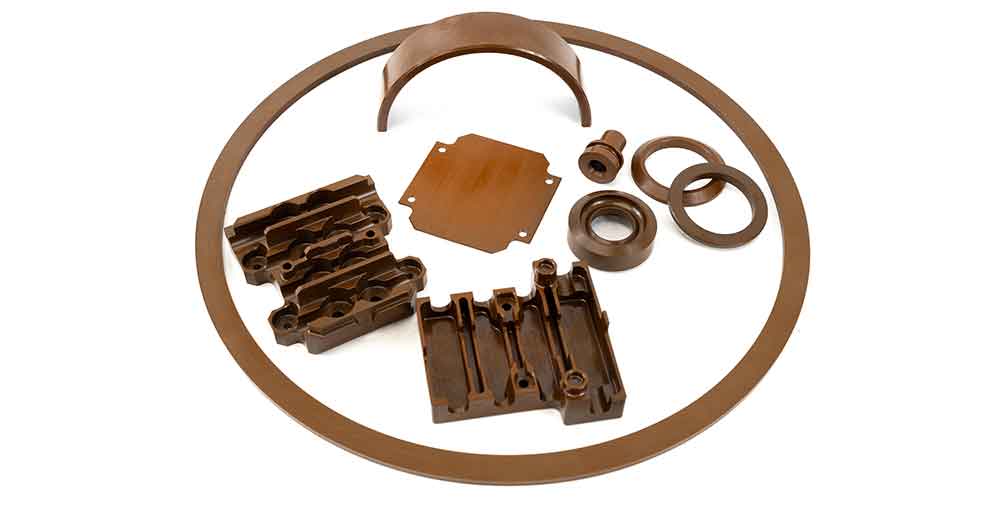
Are Cryogenic Properties Data Available for Plastics?
- A major factor behind the choice of Torlon PAI, PCTFE and PEEK for spacecraft components is their ability to retain mechanical properties in cryogenic environments.
- Cryogenic test data demonstrates that all three polymers retain a high level of tensile properties and mechanical strength under these conditions.
- The ductility of Torlon PAI, PCTFE and PEEK at cryogenic temperatures makes them prime candidates for applications that may be at risk of breakage from accidental impacts or high physical point loads.
What are the Typical Applications for High-Performance Plastics in Spacecraft?
- Sector gears in high strength, dimensionally stable Torlon 7130 reliably deploy satellite solar arrays.
- Insulators and isolators in Torlon 5030 and PEEK serve as excellent thermal and electrical insulators and isolators.
- Mounting hardware in Torlon PAI and PEEK secure a variety of apparatus, including antennas, windows, fluid and gas piping systems and insulation panels.
- Fasteners and screws in Torlon 4203 resist degradation from radiation, maintain high strength and are far lighter weight than metal parts.
- Satellite components in Ultem PEI provide high strength and EMI/RFI shielding.
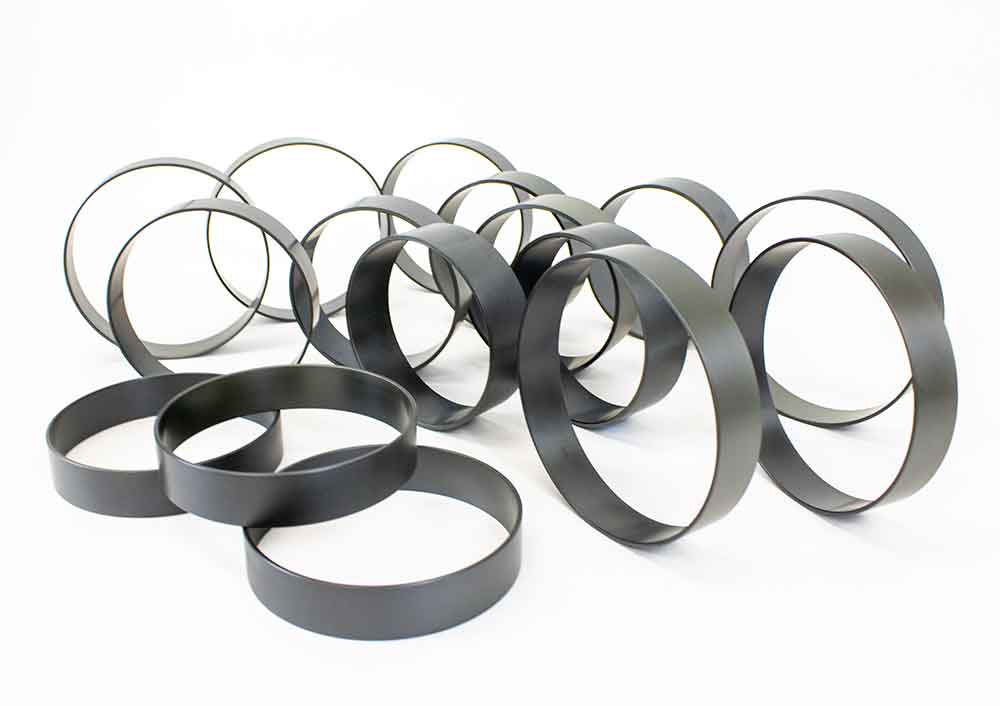
- Wear shims in bearing grades of PEEK and Torlon PAI maintain functionality in orbiting satellite propulsion positioning systems.
- Oxidizer valve seals and bushings in rocket engines rely on Torlon 4301 for chemical resistance and strength and stability in components experiencing extreme vibrations at high temperatures.
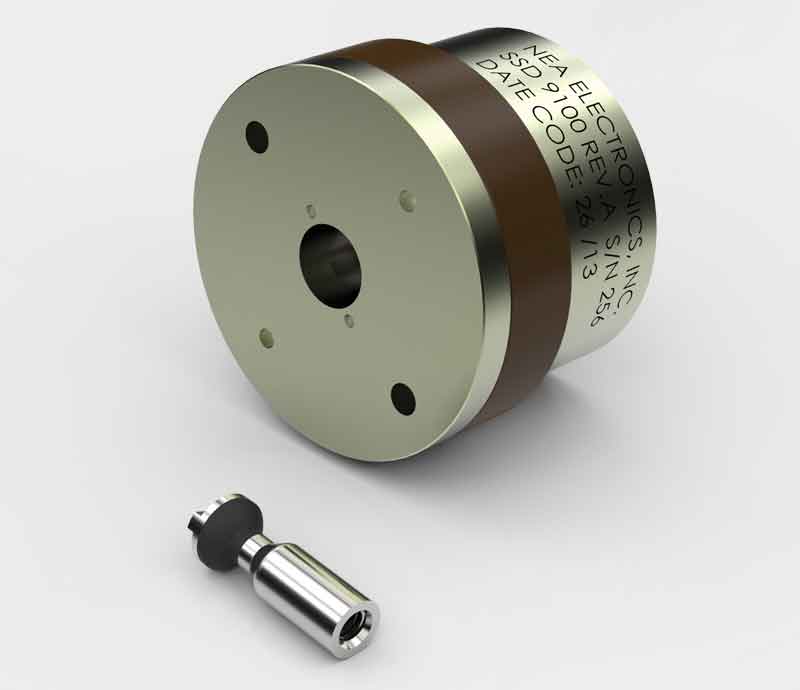
High-performance Plastics Support Technology Innovations
The critical requirements for long-term reliability, uncompromised safety, and light weight have made high-performance plastics the materials of choice for a multitude of applications in spacecraft equipment.
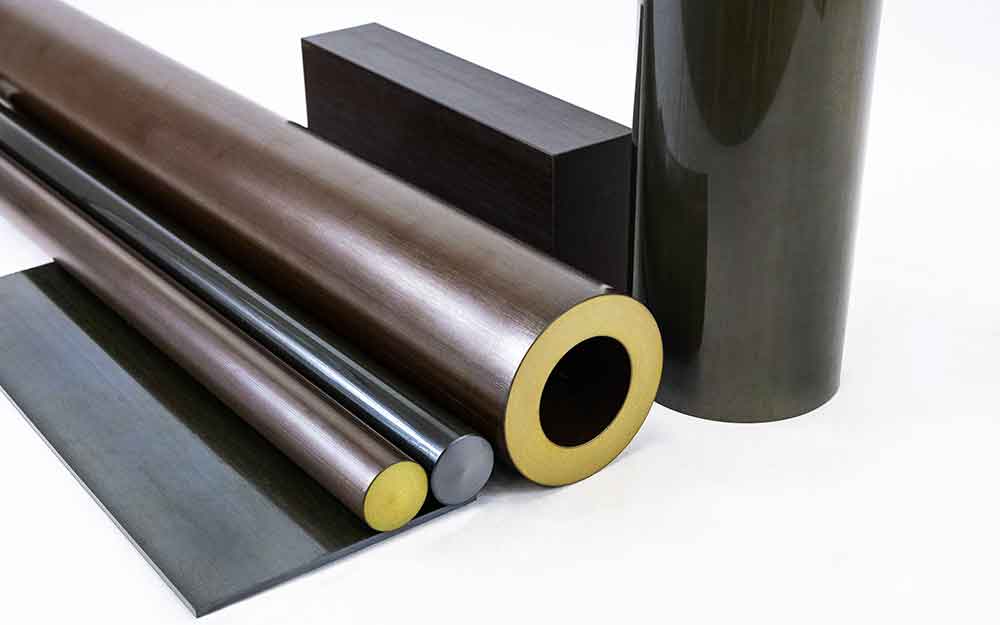
Companies specializing in advanced polymers work closely with engineers on innovative applications that capitalize on the benefits of these materials. Drake Plastics, for example, collaborates with leading spacecraft OEMs to develop next-generation components in Torlon PAI, PEEK, Ultem PEI, Vespel PI, Ryton R-4 PPS and other polymers. The company extrudes machinable shapes, develops custom shapes configurations, and produces machined and injection molded parts in these high-performance plastics for different sectors of the industry. The polymers have proven their reliability in aerospace applications for decades, and their acceptance continues to expand as the spacecraft industry grows and breaks new ground in technology.
FAQ's About High-Performance Plastics in The Spacecraft Industry
Why Is Outgassing A Problem for Spacecraft Applications?
- Some polymers are prone to outgassing which can occur in vacuum conditions, creating condensates that impair performance of critical systems, optical elements and solar collector surfaces.
- Based on testing, NASA includes specific grades of Torlon PAI and PEEK on its list of acceptable low-outgassing materials for spacecraft components.
What Kinds of Applications Require Cryogenic Grade Plastics?
- Extra-vehicular repairs and maintenance activities can expose components to possible damage given the tight workspaces at zero gravity in extreme cold.
- Plastics that resist failure from mechanical loads are also important for docking and deployment apparatus operating in deep space.
- Liquid propellant systems require materials with robust sealing properties at cryogenic temperatures.
What are Examples of Polymers That Perform Well at Cryogenic Temperatures?
- Torlon PAI, PEEK and cryogenic grade PEEK all retain high strength and ductility in cryogenic conditions.
- PCTFE and Cryogenic PEEK Polymer are particularly well-suited to cryogenic sealing applications for liquified gas propellant and cooling systems.
What are the Benefits of Specifying High-performance Plastics That Can Be Both Machined and Injection Molded?
- Applications often start out as machined parts when production volumes are low, and shift to injection molding when unit volumes justify the cost of tooling.
- The ability to make the transition in the same material may eliminate or reduce the time and cost of validating the material specification for the injection molded components.