

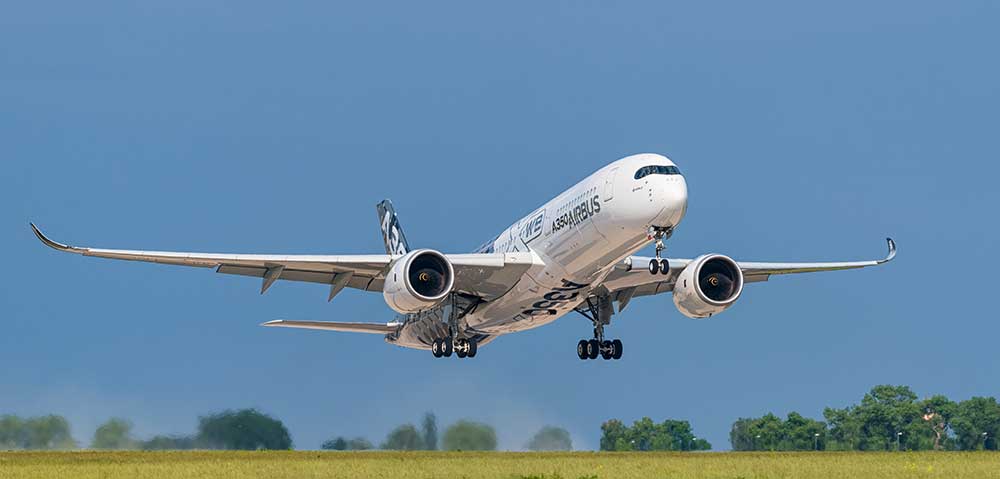
The aerospace industry comprises aircraft and spacecraft, and includes equipment related to flight and flight-related operations within and beyond Earth’s atmosphere. High-performance plastics have gained wide acceptance across the industry for their reliability in meeting the complex and demanding application requirements associated with aerospace equipment. Their growth also stems from the drive to reduce mass, a key advantage of lightweight plastics over metal.
What Are the Key Advantages of High-performance Plastics for Aerospace Components?
- Safety: Advanced polymers carry industry agency safety certifications for low flammability and smoke generation.
- Light weight: In an industry that prioritizes low physical mass for fuel efficiency, the high strength-to-weight ratio of advanced polymers enables engineers to bypass heavier metals for aerospace parts.
- Strength and stiffness retention: Vespel PI and Torlon PAI maintain structural strength at high temperatures and resist fatigue failure from severe vibrational stresses.
- High temperature resistance: Torlon PAI has the highest glass-transition temperature among aerospace plastics, at 275o C (527o F). PEEK, Ultem PEI and Vespel PI are also recognized for their stability and strength at high temperatures.
- Impact resistance and toughness at cryogenic temperatures: Seals made from PCTFE and cryogenic PEEK polymers perform reliably in liquified gases and propellants including LOX and LH2. Torlon PAI and Vespel PI are recognized for strength and durability in the cryogenic temperatures of deep space.
- Radiation resistance: Torlon PAI, Vespel PI and Ultem PEI have proven they retain strength and toughness in spacecraft applications exposed to constant radiation.
- Frictional wear resistance: Bearing and wear grades of Torlon PAI and PEEK thermoplastics extend the functional life and reliability of gears, bushings, bearings and other mechanical components under extreme dynamic loads.
- Chemical resistance: High-performance plastics withstand many different chemical environments encountered in aerospace applications. PEEK and Ryton R-4 PPS are notable for their resistance to the broadest spectrum of chemicals.
- Low vacuum outgassing: NASA lists specific grades of Torlon PAI and PEEK as thermoplastics that qualify as low outgassing materials for spacecraft.
- Thermal and electrical insulation and isolation: Plastics have far lower thermal conductivity compared to metals, and they provide both thermal and electrical insulation and isolation properties.
Specialty Formulations Improve Plastics’ Performance
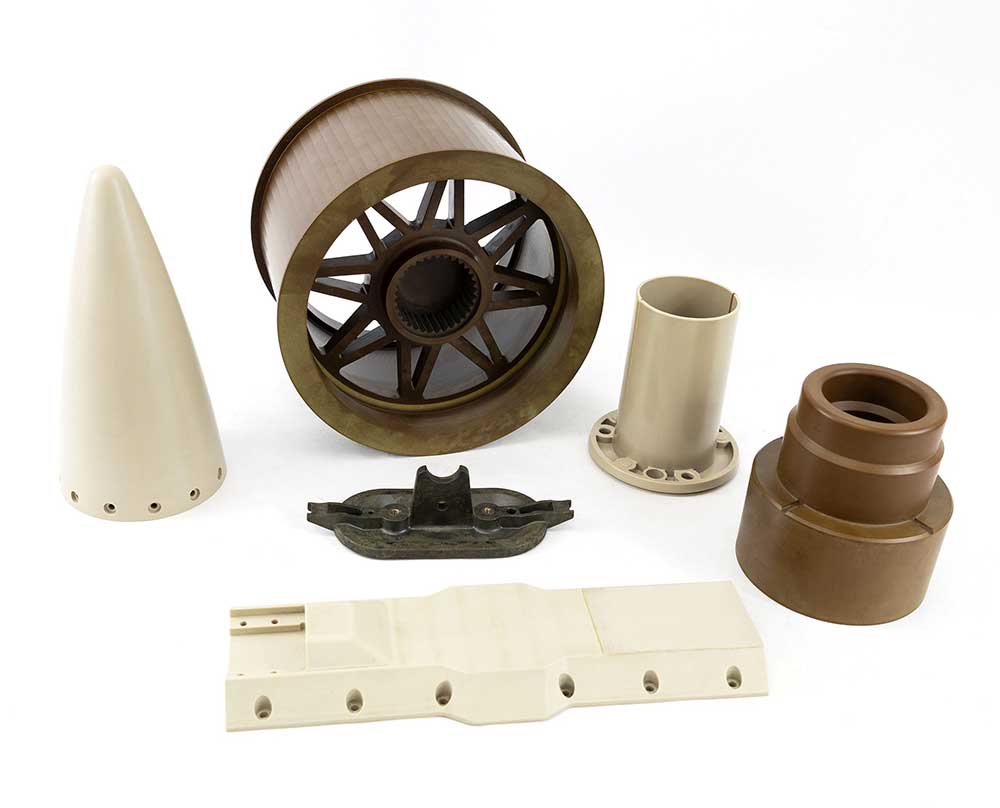
Several high-performance plastics are available in grades modified with additives that improve specific properties while maintaining the inherent attributes of the basic polymer.
- Torlon PAI, PEEK, Vespel PI and Ultem PEI are available in grades with bearing and wear properties that exceed those of the unmodified polymers.
- Glass and carbon fiber reinforcement significantly boost structural strength over unfilled versions of high-performance polymers. For example, the flexural modulus of Torlon 7130 PAI with 30% carbon fiber is nearly four times higher than that of unreinforced PAI grades.
- Drake 4645 PAI combines carbon fibers and lubricants in its formulation to improve both wear resistance and strength.
What are Examples of How Plastics Solve Complex Component Design Challenges in Aircraft?
The following brief case studies summarize how advanced plastics perform reliably under demanding conditions:
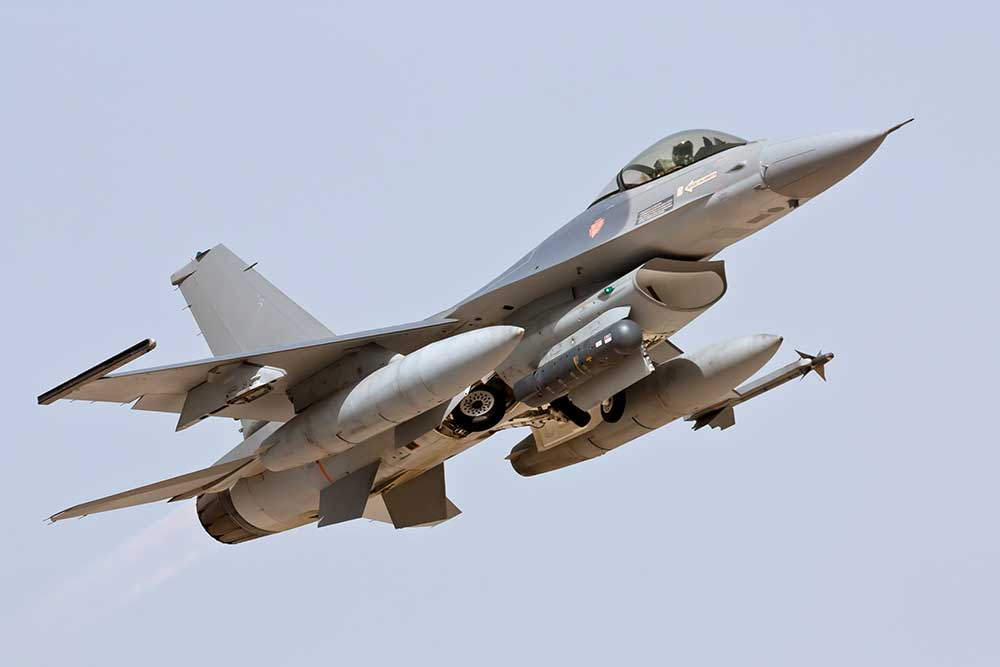
- In the military aircraft sector, fighter jets create uniquely high g-forces and complex stresses on components and systems.
- Torlon 4301 PAI combines high strength and bearing and wear properties for a wide variety of structural and mechanical components that are exposed to high stresses and dynamic loads.
- The compact fuselage designs of military aircraft can require locating hydraulic systems in close proximity to jet engines.
- PEEK and Torlon PAI have a proven history in structural support brackets and other components for fluid handling systems based on their thermal isolation and insulation properties and chemical resistance.
- In commercial and military aircraft, mechanical components in heavy cargo bay doors must operate smoothly and with precision after numerous operations under high dynamic loads.
- Torlon PAI bearing and wear grades deliver the compressive strength, dynamic load-bearing properties and frictional wear resistance needed in rollers and sector gears for these systems.
- Aircraft fuel system components must be impervious to chemicals, withstand high vibrations without fatigue failure, maintain strength and toughness at temperature extremes, and in some cases protect against electrical discharges.
- Tube brackets and structural fasteners machined from PEEK and Torlon PAI withstand jet and rocket fuels, resist stress fatigue and provide thermal and electrical isolation and insulation properties.
Which Plastics Withstand the Extreme Conditions Required for Spacecraft Applications?
Several high-performance plastics have proven their reliability in spacecraft equipment ranging from launch vehicles to satellites and deep space telescopes. Typical examples:
- During rocket launches, components experience extreme vibrational forces, high temperatures and exposure to cryogenic propellants that test the limits of materials.
- Structural components and mounting fixtures made from Torlon PAI, PEEK and Vespel PI stand up to the punishing conditions. Each material offers a unique combination of properties for specific engineering requirements.
- Communication satellites require materials that ensure signal integrity and the ability to perform long term in the environment of space.
- Ultem 1000 PEI combines strength and radiation resistance with RF transparency for robust signal quality in communication satellite antennas.
- Deep space telescope solar arrays must be deployed flawlessly in environments where repair and component replacement are not options.
- Torlon 7130 PAI is specified for thermal isolators in telescope solar array deployment mechanisms for its strength, radiation resistance, thermal isolation properties and toughness at cryogenic temperatures.
- Gears, bearings and sliding pads in docking systems and apparatus deployment mechanisms require materials that resist frictional wear and maintain strength and toughness where radiation and cryogenic temperatures are constant factors.
- Bearing and wear grades of PEEK, Torlon PAI and Vespel PI are specified for a variety of dynamic load-bearing applications in spacecraft equipment. Each polymer has unique properties that provide efficient options for various engineering requirements and environments.

Drake Plastics: Your Partner for Aerospace Grade High-Performance Polymers
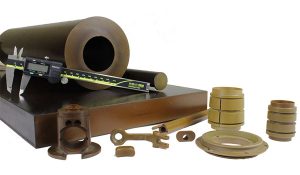
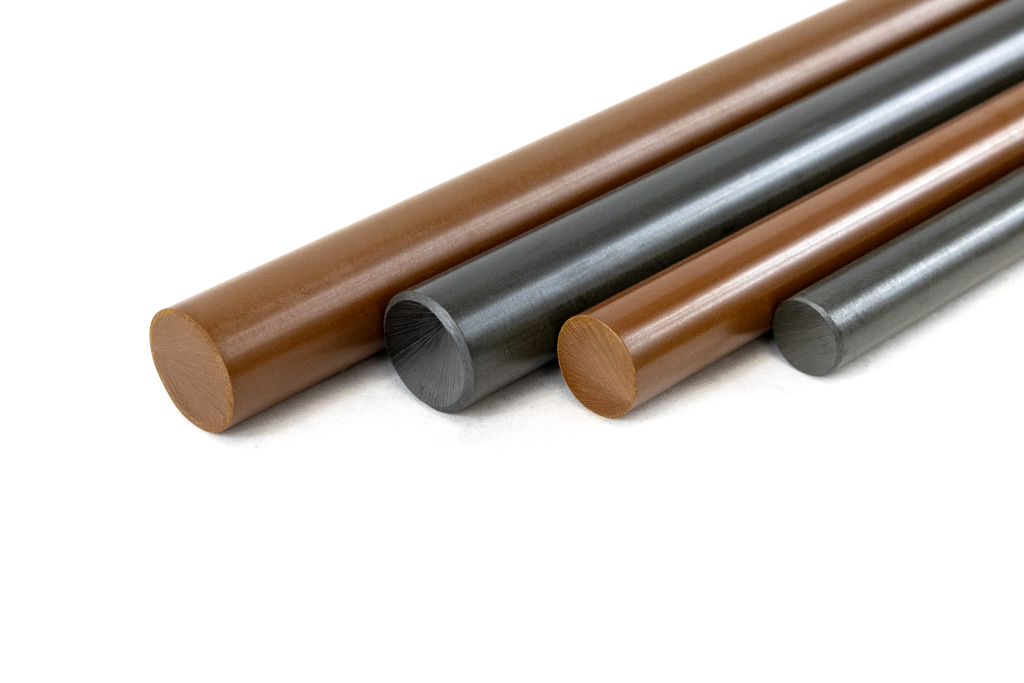
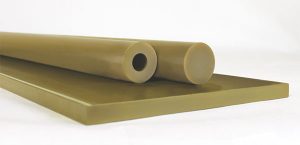
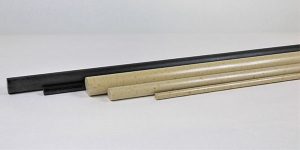
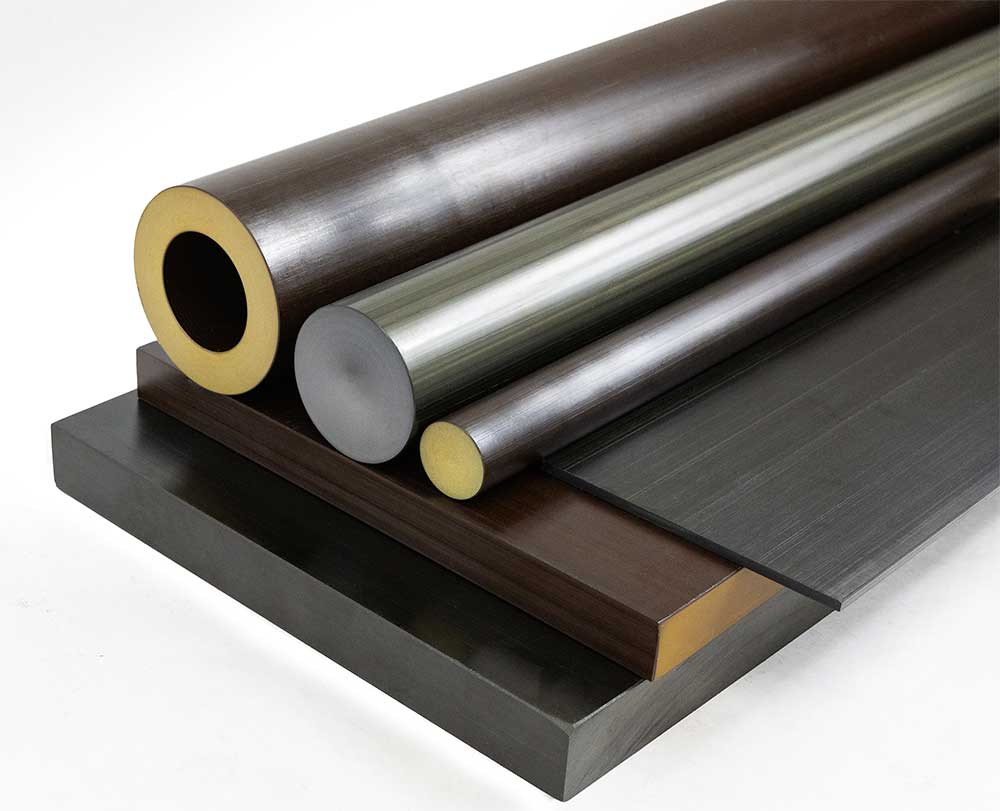
The conditions in which aircraft and spacecraft equipment must function are well-within the capabilities of advanced polymers. Torlon PAI, PEEK, Ultem PEI, Vespel PI, Ryton R-4 PPS and PCTFE are among the select group of materials that have demonstrated their dependability in components ranging from simple exterior aircraft light housings to thermal isolators used in solar array actuators of the James Webb space telescope. With decades of proven performance, these polymers have become the primary material candidates for a growing number of applications. Drake Plastics, a leader in advanced polymers for the aerospace industry, offers extruded machinable shapes as well as CNC machining and injection molding capabilities to meet diverse component design and production requirements in these materials.
FAQ's About High-Performance Plastics For The Aerospace Industry
1. What plastics are used in aerospace applications?
The most common high-performance plastics for aerospace applications are Torlon® PAI, PEEK, Vespel® PI, Ultem® PEI, Ryton® PPS, and PCTFE. These advanced polymers are specified for aircraft and spacecraft components because they combine lightweight construction with high strength, temperature resistance, chemical resistance, and reliability under extreme operating conditions.
2. Why are high-performance plastics replacing metals in aircraft and spacecraft?
High-performance plastics are replacing metals in aerospace because they offer a superior strength-to-weight ratio, which directly improves fuel efficiency and payload capacity. Advanced polymers like Torlon PAI and PEEK also provide thermal and electrical insulation, chemical resistance, and resistance to fatigue—properties that metals often cannot match in a single material.
3. Which plastic has the highest temperature resistance for aerospace use?
Torlon PAI has the highest glass-transition temperature among aerospace plastics at 275°C (527°F), making it the top choice for components exposed to sustained high heat. PEEK, Vespel PI, and Ultem PEI also perform reliably at elevated temperatures, with each polymer offering a distinct property profile for specific aerospace applications.
4. Are aerospace plastics certified for flame and smoke standards?
Yes. Many high-performance aerospace plastics carry industry certifications for low flammability, low smoke generation, and low toxicity, including compliance with FAR 25.853 cabin material standards. Materials such as PEEK, Ultem PEI, and Torlon PAI are commonly specified for aircraft interiors, electrical housings, and structural components where fire safety is critical.
5. What plastics does NASA approve for spacecraft outgassing requirements?
NASA lists specific grades of Torlon PAI and PEEK as low-outgassing materials approved for spacecraft applications. Low-outgassing polymers are essential in space because volatile compounds released by materials in vacuum can contaminate optical surfaces, sensors, and electronics on satellites and deep space telescopes.
6. Can high-performance plastics withstand cryogenic temperatures in space?
Yes. PCTFE and cryogenic grades of PEEK perform reliably in liquefied gases and propellants such as LOX (liquid oxygen) and LH₂ (liquid hydrogen). Torlon PAI and Vespel PI also retain strength and toughness in the cryogenic temperatures of deep space, making them well-suited for launch vehicle and satellite components.
7. What is Torlon PAI used for in aerospace?
Torlon PAI is used in aerospace for structural brackets, bearings, bushings, sector gears, thermal isolators, and fuel system components. Bearing and wear grades like Torlon 4301 deliver high compressive strength and frictional wear resistance, while reinforced grades like Torlon 7130 PAI are specified for high-stress structural and cryogenic applications.
8. How does PEEK perform in aerospace applications?
PEEK performs exceptionally well in aerospace applications that require chemical resistance, high-temperature stability, and toughness. It is specified for aircraft fuel system components, hydraulic brackets, electrical connectors, bearings, and cryogenic seals. PEEK is also a NASA-approved low-outgassing material for spacecraft and satellite applications.
9. Are aerospace plastics resistant to jet fuel and hydraulic fluids?
Yes. PEEK, Torlon PAI, and Ryton R-4 PPS resist a wide range of aerospace fluids, including jet fuels, rocket propellants, hydraulic oils, and de-icing chemicals. This chemical resistance—combined with strength at elevated temperatures and resistance to vibrational fatigue—makes them ideal for fuel system brackets, fittings, and structural fasteners.
10. What machining options are available for aerospace plastic components?
Drake Plastics supplies extruded machinable shapes and offers in-house CNC machining and injection molding for aerospace components. This vertically integrated capability allows aerospace engineers to source aerospace-grade Torlon PAI, PEEK, and other high-performance polymers as raw stock or as finished, precision-machined parts ready for assembly.