

Aircraft systems and component parts must operate in a variety of conditions that pose unique and complex engineering challenges. Safety and reliability are paramount, and weight reduction and space-efficiency are priorities in aircraft design for every component. Decades of acceptance and growth of high-performance plastics in aircraft equipment demonstrate their ability to meet these criteria.
What Are the Key Advantages of High-performance Plastics for Aircrafts?
Aircraft components and systems are exposed to widely different physical demands and variations in operating conditions. Torlon PAI, PEEK, Ultem PEI, Vespel PI, Ryton R-4 PPS and PCTFE are among the high-performance plastics have demonstrated their long-term performance regardless of the application environment or operation.
The following summarizes the key performance benefits of these aircraft plastics:
- Certifications to FAR and UL 94 flammability and smoke generation standards
- Vespel PI, Torlon PAI, PEEK, Ultem PEI, Ryton PPS and PCTFE are among the polymers certified to the global aviation industry requirements for flame and smoke generation.
- High strength-to-weight ratios that enable metal replacement
- The combination of light weight and strength, also called specific strength, provides reliable material solutions that lower physical mass compared to metals.
- High structural stability, compressive strength and creep resistance
- Torlon PAI stands out on rigidity with higher strength and stiffness at 205o C (400o F) than most engineering plastics at room temperature.
- Grades with glass or carbon fiber reinforcement increase the inherently high strength of Torlon PAI, PEEK, Ultem PEI and other advanced polymers.
- Retention of structural strength at high temperature extremes
- Torlon PAI maintains high strength at temperatures approaching its glass-transition temperature (Tg) of 275o C (527o F) – which is also the highest of any melt-processable thermoplastic.
- Fatigue resistance under repeated high vibration stresses
- PEEK, Vespel PI and Torlon PAI are lightweight materials with excellent fatigue resistance and are specified for applications exposed to frequent high mechanical stresses.
- Impact strength and toughness at cryogenic temperatures
- PCTFE and cryogenic PEEK grades perform well as material options for seals in LH2, LNG and other liquefied gas systems.
- Torlon PAI and Vespel PI retain their inherently high durability and strength at temperatures down to cryogenic levels.
- Bearing and wear properties that minimize frictional wear
- As polymers, Vespel PI, Torlon PAI and PEEK are inherently wear-resistant.
- Special bearing and wear grades boost their level of wear-resistance for aerospace parts under extreme dynamic loads.
- Resistance to chemical fluids, fuels and lubricants
- High-performance plastics withstand corrosion and degradation from many different chemicals encountered in aerospace applications.
- PEEK and Ryton R-4 PPS are notable for resisting corrosion and degradation in the broadest spectrum of chemicals.
- Thermal and electrical insulation and isolation
- Unfilled or neat polymers have far lower thermal conductivity compared to metal. They also insulate and isolate systems and components to prevent damage from electrical discharges more effectively.
- Grades containing carbon powder lubricants or carbon fibers offer a higher level of conductivity compared to unfilled grades, a feature that can be useful in certain applications.

Production Methods for Advanced Polymer Components
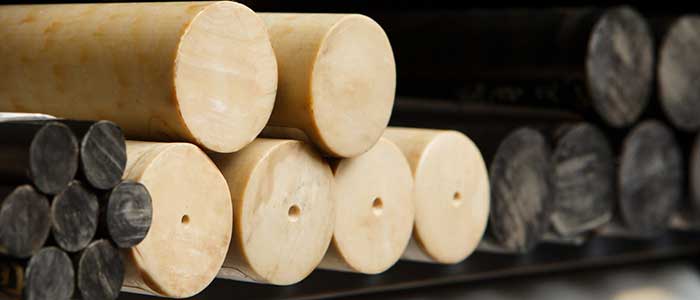
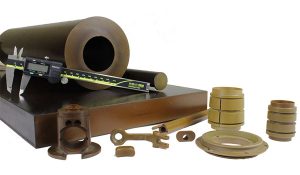
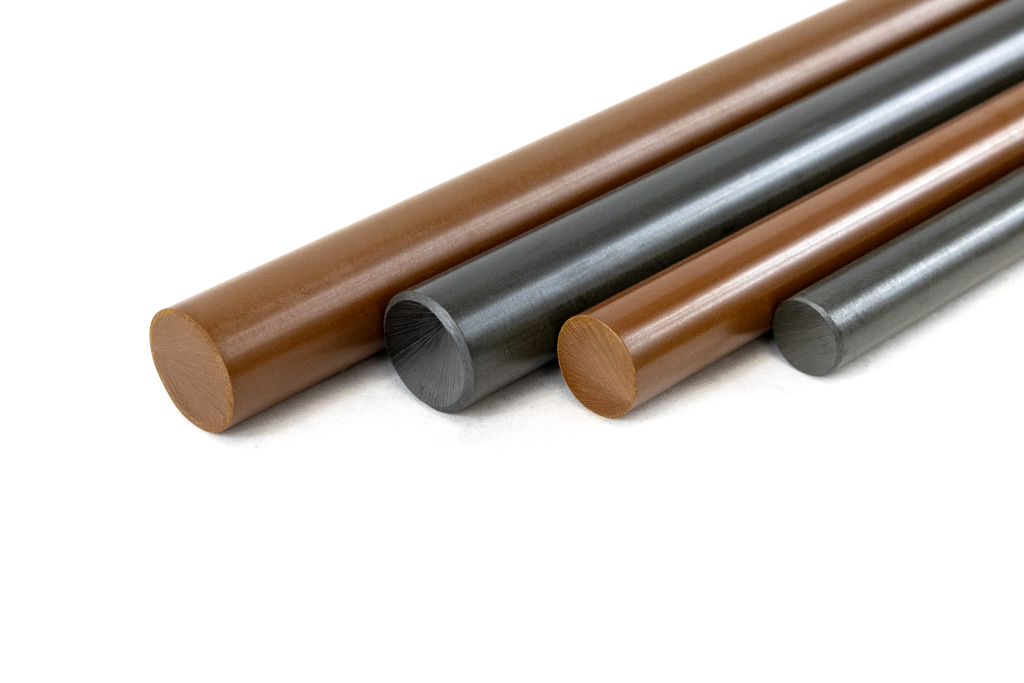
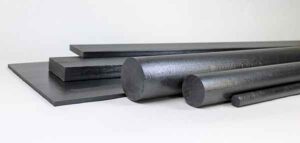
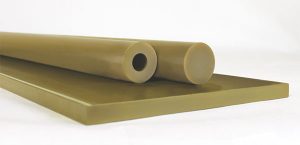
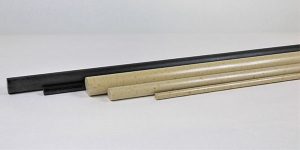
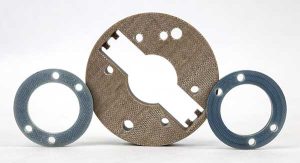
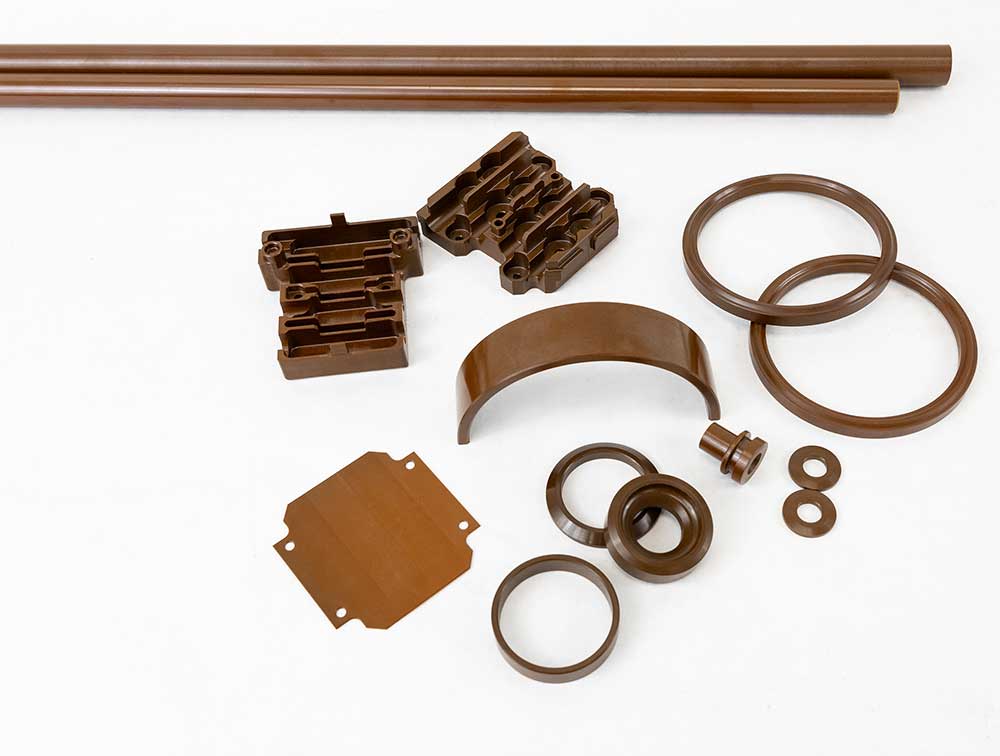
The versatile processes for manufacturing parts from high-performance plastics provide the flexibility to produce virtually any quantity with high efficiency. Drake Plastics, for example, melt-extrudes machinable shapes in Torlon PAI, Vespel PI, PEEK, Ultem PEI, PCTFE, Ryton PPS and other advanced polymers. Parts manufacturing capabilities include precision machining of shapes for prototypes and relatively low unit volumes, and injection molding pelletized resin in the same polymer for high quantities that justify an investment in tooling. Once specified, the same material and grade can transition from prototypes to machined parts and ultimately to injection molded components as quantity requirements grow.
The exception is Vespel PI, a non-melt-processable polymer. Components are machined from shapes, and the direct-forming process allows efficient production of higher quantities when required.
Typical Aircraft Applications for Torlon PAI, PEEK, Vespel PI and Other Aerospace-Grade Plastics
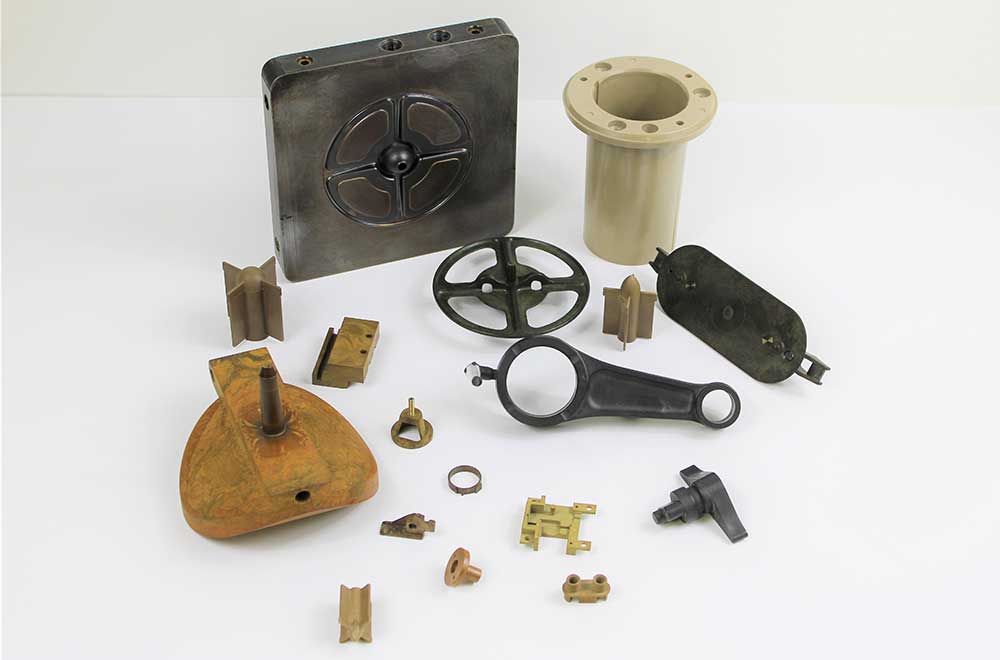
The unique properties and light weight that high-performance plastics offer has led to their specification for components within virtually all aircraft operating systems:
- Mechanical systems and actuators
- Bushings, bearings and gears are commonly specified in Vespel PI and bearing and wear grades of Torlon PAI and PEEK.
- Sector gears injection molded from Torlon 4203 ensure flawless functionality for inlet guide vanes in aircraft turbines.
- Hydraulic systems
- With their exceptional chemical resistance, PEEK and Ryton R-4 PPS are routinely specified for internal seals and other components.
- Unreinforced Torlon PAI and PEEK offer high strength and the lowest thermal conductivity for thermal isolators and brackets for fluid lines.
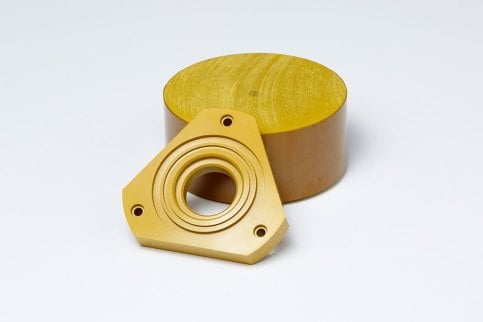
Case Study: Fluid System Thermal and Electrical Isolator
Engineers determined that running tubing through fuel tanks instead of around them would provide a substantial weight reduction. The hydraulic lines had to be insulated with a material capable of withstanding punishing amounts of thermal and electrical energy. Torlon 4203 PAI provided the solution. The design innovation isolates thermal energy, prevents electrical arcing and maintains its strength from -40° to 177°C (-40° to 350°F).
- Electrical equipment and aircraft support systems
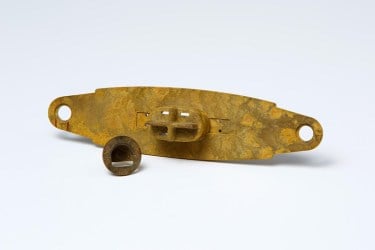
- Electrical insulators machined from glass fiber reinforced grades of Torlon 5030, KetaSpire KT 820 GF30 PEEK and Ryton R-4 PPS offer electrical barrier properties and high strength.
- Terminal blocks injection molded or machined from glass-reinforced Ultem 2300 maintain dimensions and have the electrical properties needed for reliability in on-board generators.
- Aerostructure applications
- Torlon PAI and PEEK provide high strength, impact resistance and thermal isolation. Grades reinforced with carbon or glass fibers offer higher structural properties for fuselage components when required.
- Screws and fasteners made from Torlon 4203 have high strength, EMI/RFI transparency and lighter weight vs. metallic fasteners.
- External light housings in fiber-reinforced Torlon PAI and PEEK maintain dimensions at temperature extremes and resist fuel spills and deicing chemicals.
- Propulsion system and engine components
- At 275°C (527°F), Torlon PAI has the highest glass transition temperature (Tg) among thermoplastics. Its strength at high temperature extremes and its chemical resistance are key factors behind many specifications for Torlon in applications related to aircraft propulsion systems.
- Fuel and air connects machined from Torlon 4203 Seamless Tube® extend the flying range of military jets.
- Blocker door bushings: Torlon 4301 retains structural integrity under high loads to 500°F and resists wear with no lubrication.
- 30% glass-reinforced PEEK provides high temperature resistance and electrical isolation properties in battery connectors used in propulsion systems.
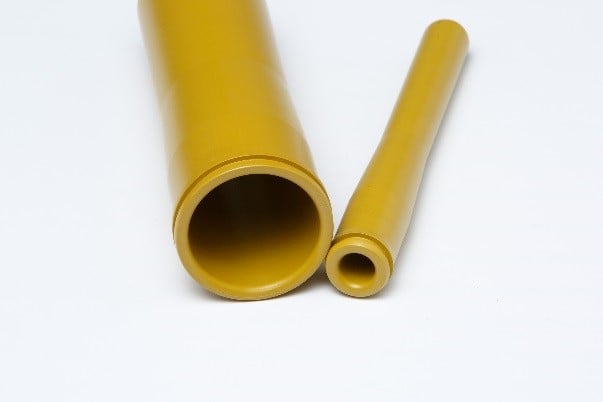
Case Study: Blocker Door Bushings
Blocker doors create the reverse thrust that slows jet aircraft during landing. The bushings are attached to the door hinge assembly and are critical to their operation. Made from Torlon 4301 PAI, they maintain their strength and stability at temperatures ranging from -40° to 260°C (-40° to 500°F), and resist frictional wear without lubrication.
- Cabin interiors and systems
- Torlon PAI and PEEK have the strength and bearing and wear properties needed for mechanical components such as hinges and rollers.
- PEEK and Ultem PEI provide thermal and electrical isolation and insulation properties and structural strength for brackets and other mounting components for HVAC, power and fluid handling systems.
- Ultem PEI combines rigidity, toughness and electrical properties for connectors, passenger service unit housings and flight deck instrument panels, and can be color-matched to aesthetic requirements.
The Development Role of Advanced Polymer Specialists
Aircraft engineers are working with specialists in high-performance plastics on innovative designs to achieve more fuel-efficient and lighter-weight components for jet engines, aerostructures and other operating systems. Its shapes extrusion, machining and injection molding capabilities and applications expertise in high-performance plastics have positioned Drake Plastics as a collaborative resource for its customers in the development of these and other advances for next-generation aircraft.
FAQ's About High-Performance Plastics in The Aircraft Industry
Are there international standards for flammability of plastics in aircraft?
Standards for aircraft OEMs and retrofitters are set and overseen by the Federal Aviation Administration (FAA) in the US. Virtually identical regulations are governed by the European Union Aviation Safety Agency (EASA), and the Civil Aviation Administration of China (CAAC). All three regions have major OEM aircraft manufacturers and retrofitters.
Can plastics be used for mechanical components exposed to de-icing chemicals?
Mechanical components made from unfilled and bearing and wear grades of PEEK are highly resistant to salt brine and ethylene glycol de-icing solutions and offer dependable wear resistance under high dynamic loads. PEEK is also resistant to propylene glycol in certain concentrations. Testing is always advised.
What plastics are best for structural strength at high temperatures?
Torlon PAI stands out among melt-processable thermoplastics with the highest glass-transition temperature (Tg) of 275°C (537°F). It maintains its superior rigidity in aircraft applications exposed to temperatures approaching that level.