
Satellite hardware places a double demand on insulating materials: they must isolate thermally and electrically, and they must keep their strength through launch loads, vacuum, radiation exposure and thermal cycling that swings from cryogenic cold to the heat near propulsion and power systems. Torlon 5030, a high modulus polyamide-imide (PAI) reinforced with 30% glass fiber, meets that combination. It performs from cryogenic temperatures to 500°F (260°C), and has proven itself in spacecraft service in thermal and electrical isolators, structural insulators and mounting hardware.

Why Do Satellite Engineers Specify Torlon 5030?
The requirement usually starts with temperature and load. When a structural insulator or isolator has to carry load above 300°F (149°C), the strength and creep resistance of Torlon 5030 are unmatched among high-temperature polymers, and its modulus is second only to carbon fiber reinforced Torlon 7130 over its operating range. Because the reinforcement is glass fiber rather than carbon fiber, Torlon 5030 adds that stiffness without electrical conductivity, so the same part can isolate electrically while it carries structural load.
Torlon 5030 also retains toughness at the other end of the scale. Like the other imide polymers Drake Plastics converts, it keeps its strength and ductility at cryogenic temperatures that can shatter many metals, which matters for deployment mechanisms and deep space systems that spend their service life cold.
Can Torlon 5030 Replace G-10 and G-11 Glass Epoxy in Satellites?
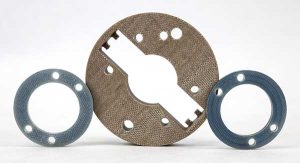
G-10 and G-11 glass epoxy laminates are familiar insulator materials, but they run into temperature constraints around 170°C. Torlon 5030 extends the same thermal and electrical insulating role past that ceiling, to 260°C and above, with margin for the hot zones near propulsion and power electronics.
- No delamination risk – G-10 and G-11 are built up from laminate layers that can separate under machining stress, vibration or thermal cycling. Torlon 5030 parts are machined from extruded thermoplastic stock shapes with no layers to delaminate.
- Lighter weight – Torlon 5030 weighs less than G-10 and less than the ceramics often considered for the same insulating duties, and every gram matters on a launch manifest.
- Higher continuous temperature – performance from cryogenic to 260°C versus the roughly 170°C limit of G-10/G-11.
How Does Torlon 5030 Handle Radiation in Space?
Constant radiation exposure in orbit embrittles many polymers in relatively short periods. Torlon 5030 is not one of them. In radiation tolerance testing conducted by the American Composites Manufacturing Learning Center, test specimens extruded into shapes and machined into parts by Drake Plastics retained the required level of mechanical properties at 109 rads, the highest exposure level in the test program. The material withstands gamma radiation and electron bombardment, which keeps insulators and isolators serviceable over long missions.
Engineering note: Specific grades of Torlon PAI also appear on the low-outgassing materials list NASA maintains for spacecraft applications, based on TML below 1% and CVCM below 0.1%. Ask Drake which grades carry the tested data for your application.
Dimensional Stability That Tracks Aluminum
Thermal cycling works loose anything that expands at a different rate than the structure around it. Torlon 5030 offers a coefficient of linear thermal expansion (CLTE) similar to aluminum, and 50% lower than unreinforced Torlon 4203, so insulators, spacers and housings machined from it hold their fit against aluminum structure through temperature swings. It delivers that stability without the conductivity that carbon fiber reinforcement would introduce.
What Satellite Components Are Made from Torlon 5030?
Torlon 5030 serves wherever a satellite needs insulation that also carries load:
- Thermal isolators and insulators that separate hot zones from sensitive structure
- Electrical insulators and isolators that combine dielectric isolation with structural stiffness
- Connectors and connector bodies
- Spacers and standoffs that hold position through thermal cycling
- Housings for instruments and electronics
- Fasteners that resist radiation and save weight against metal hardware
- Valve seats and activation balls in fluid and gas systems
- Test sockets for ICs in ground support and qualification equipment
Torlon 5030 Specifications
Torlon 5030 stock shapes from Drake Plastics are produced to recognized industry and OEM specifications, including:
ASTM 5204 PAI023G30, which replaces Mil-P 46179A Type III Class 1 · ASTM D7292 PAI0130 · AMS 3670/4 · HS MS29.04-05, Form 2, Grade 1 and/or 2 · HS11791 Type III · BMS8-269C, Class 3, Type 1 · Honeywell MCS7004, Type 5 · GE A50TF190, Class B
Drake Plastics is certified to AS9100D / ISO 9001:2015. See the Torlon 5030 resin data sheet for property data.
Torlon 5030 Stock Shapes and Machined Parts from Drake Plastics
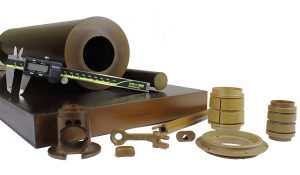
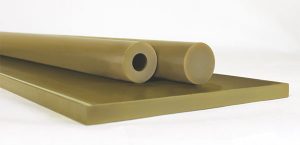
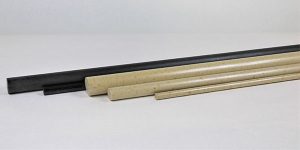
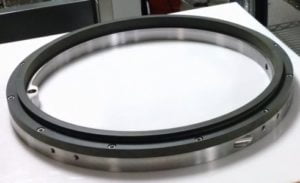
Drake Plastics extrudes Torlon 5030 into machinable stock shapes and converts it into finished components:
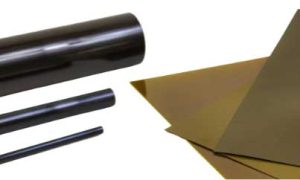
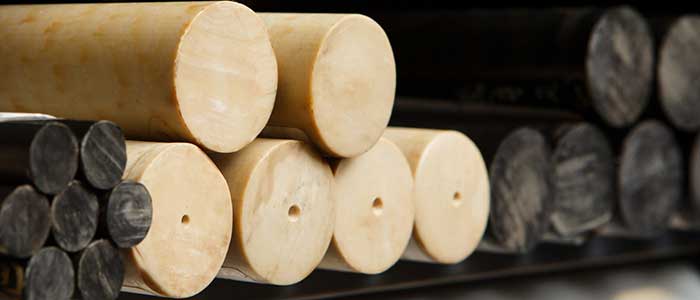
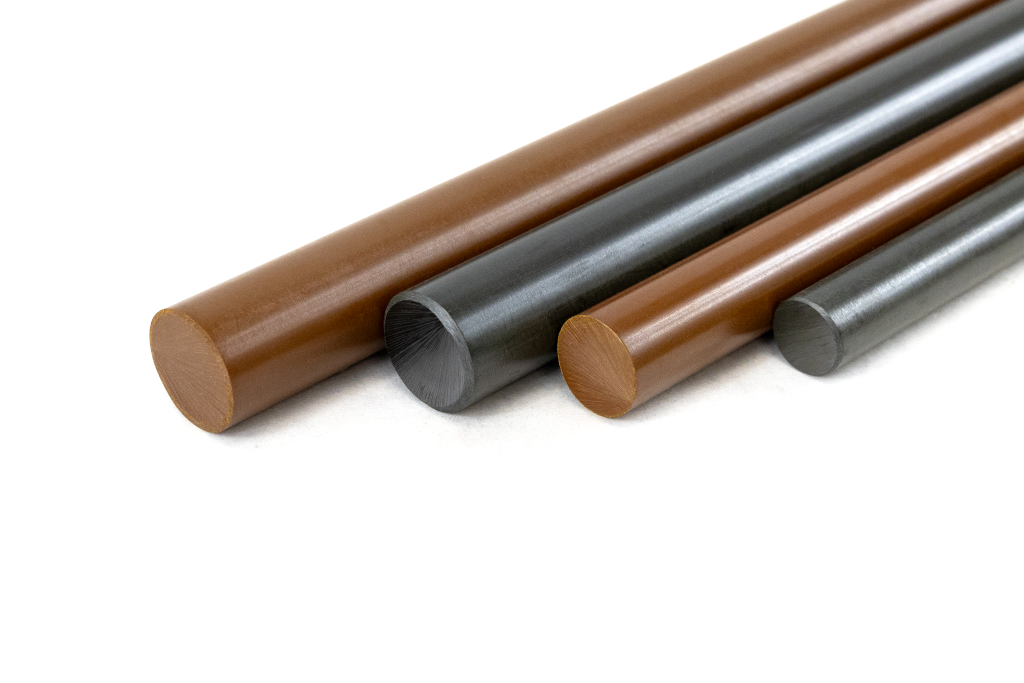
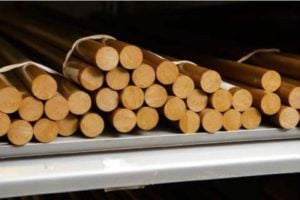
- Rod – .125” to 10” diameter
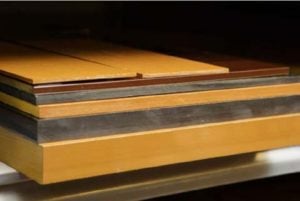
- Plate – .08”x4” to 1.25”x12”
- Seamless Tube® – 1” OD x .5” ID to 7.625” OD x 3.25” ID
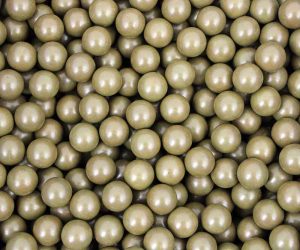
- Balls – .125” to .625” and 3.1 to 15.9 mm
- Precision machined components and injection molded parts, plus many custom sizes
Qualifying Torlon 5030 for a satellite program, or weighing it against G-10, G-11 or a ceramic? Ask Drake. Our engineers have supported spacecraft OEMs for decades and can help match the grade and form to the requirement.
FAQs About Torlon 5030 in Satellite Applications
What temperature range can Torlon 5030 handle in satellite applications?
Torlon 5030 performs from cryogenic temperatures up to 500°F (260°C). Its strength and creep resistance above 300°F are unmatched among high-temperature polymers, and its modulus is second only to Torlon 7130 over its operating range.
Is Torlon 5030 radiation resistant?
Yes. In radiation tolerance testing conducted by the American Composites Manufacturing Learning Center, Torlon 5030 test specimens extruded and machined by Drake Plastics retained the required level of mechanical properties at 109 rads, the highest exposure level in the test program. The material resists gamma radiation and electron bombardment.
Why replace G-10 or G-11 glass epoxy with Torlon 5030?
G-10 and G-11 glass epoxy laminates run into temperature constraints around 170°C. Torlon 5030 extends the same insulating role to 260°C and above, weighs less than G-10 and ceramics, and because it is machined from extruded thermoplastic stock shapes rather than laminate layers, there is no risk of delamination.
What forms does Drake Plastics offer Torlon 5030 in?
Drake Plastics extrudes Torlon 5030 as rod from .125” to 10” diameter, plate from .08”x4” to 1.25”x12”, Seamless Tube® from 1” OD x .5” ID to 7.625” OD x 3.25” ID, and balls from .125” to .625” (3.1 to 15.9 mm), plus many custom sizes, precision machined components and injection molded parts.