
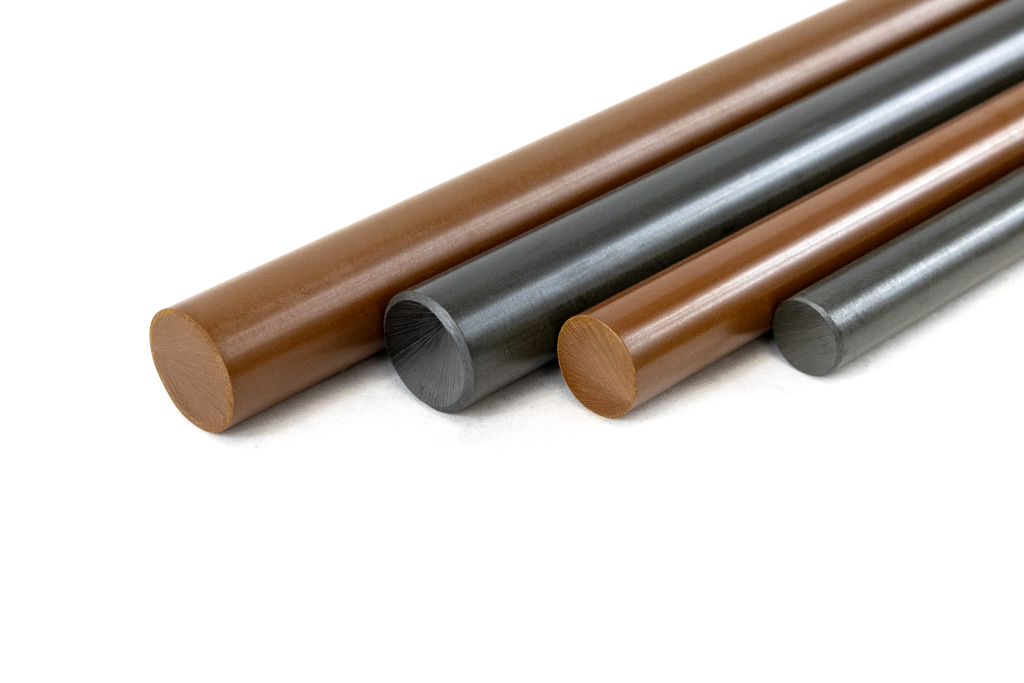

Torlon PAI’s aerospace applications are among the material’s most demanding, and demonstrate the polymer’s exceptional across-the-board performance. Few other industries test the limits of Torlon polyamide-imide’s full combination of properties. Aerospace components must:
- Perform reliably in both extreme heat and cryogenic environments
- Maintain strength and dimensional stability under high pressures and stresses
- Stand up to chemical environments that corrode metals
- Resist frictional wear in dynamic applications
- Withstand the effects of radiation
- Afford EMI/RFI transparency
- Provide mission-critical reliability in deep space
- Minimize weight
- Deliver consistently reproducible quality when injection molded or machined
Few materials satisfy all the criteria. Torlon PAI has proven it can do so dependably for aerospace firms through decades of specifications.
Why Aerospace Firms Turn To Torlon PAI for Dependable Performance
Torlon has been specified by high technologies for decades as a solution to performance challenges in severe operating conditions. Applications in the aerospace industry that demonstrate its performance in extreme environments include:
- Thermal isolators in deep space: Mission-critical components for the James Webb Space Telescope include non-explosive actuators in the release mechanisms that deploy various systems of the telescope. Engineers who evaluated materials for the actuators could not compromise dependability given the inaccessibility for repairs or replacement. Their work resulted in selecting 30% glass-reinforced Torlon 5030 for its superior strength and stiffness relative to other advanced polymers. The high-strength Torlon grade maintains its strength and resists creep beyond 200°C, and it remains dimensionally stable in components experiencing the wide temperature swings encountered from launch through deep space deployment.
- Hydraulic system isolators: Reducing aircraft weight is a persistent goal, and Torlon PAI helped make it an attainable one in an innovative approach to reducing mass and cost in a hydraulic system. Engineers determined that running hydraulic lines through fuel cells instead of around them could yield a significant weight reduction in their composite aircraft. To make this happen, the hydraulic lines had to be insulated from the effects of lightning strikes. Torlon 4203 emerged as the specified material because of its thermal and electrical isolation and insulation properties and its retention of strength and toughness over the application’s operating range of -40o to 177o C (-40o to 350o F).
- Blocker door bushings: Blocker doors create the reverse thrust that slows down aircraft during landing. These doors must be extremely precise in their operation, and they rely heavily on the hinge assembly bushings for their precision. The operating conditions for the bushings place extreme demands on the specified material. They must retain mechanical strength and toughness from -40 to 260o C (-40o to 500o F). They must also resist frictional wear under high dynamic loads without lubrication. Torlon 4301 satisfied the performance criteria and met the industry’s safety standards for flame and smoke generation.
- Fasteners: While it seems like a simple application, screws and other fasteners that affix parts and systems to aircraft and spacecraft serve a mission-critical role under rigorous operating conditions. Materials specified must withstand extreme stresses from high vibrational loads, perform at operating temperatures from cryogenic levels to over 250o C (482o F), minimize mass, and stand up to various fuels and propellants as well as radiation. Torlon 4203 has been specified for these key components for its ability to meet these criteria and provide EMI/RFI transparency when needed.
- Jet fighter fuel connects– With auxiliary tanks that extend its range by 50%, the F-16 can take on the role of a strategic bomber. Fuel tank connects for these range-enhancing systems were originally evaluated in stainless steel for its strength and corrosion resistance. However, the risk of lightning strikes required insulative properties that metal could not provide. Finding alternatives in insulative high-performance plastics proved to be a challenge given the need to withstand jet fuel, retain strength and stability at temperatures to 200o C (400o F) and resist stresses from severe vibrational loads and g-forces. Torlon 4203 proved itself against all requirements, and its availability as Drake Seamless Tube® provided uniform stress resistance with lower manufacturing cost compared to tubes machined from rod.
These examples are among the numerous applications where Torlon has proven itself as the highest strength melt-processable thermoplastic available.